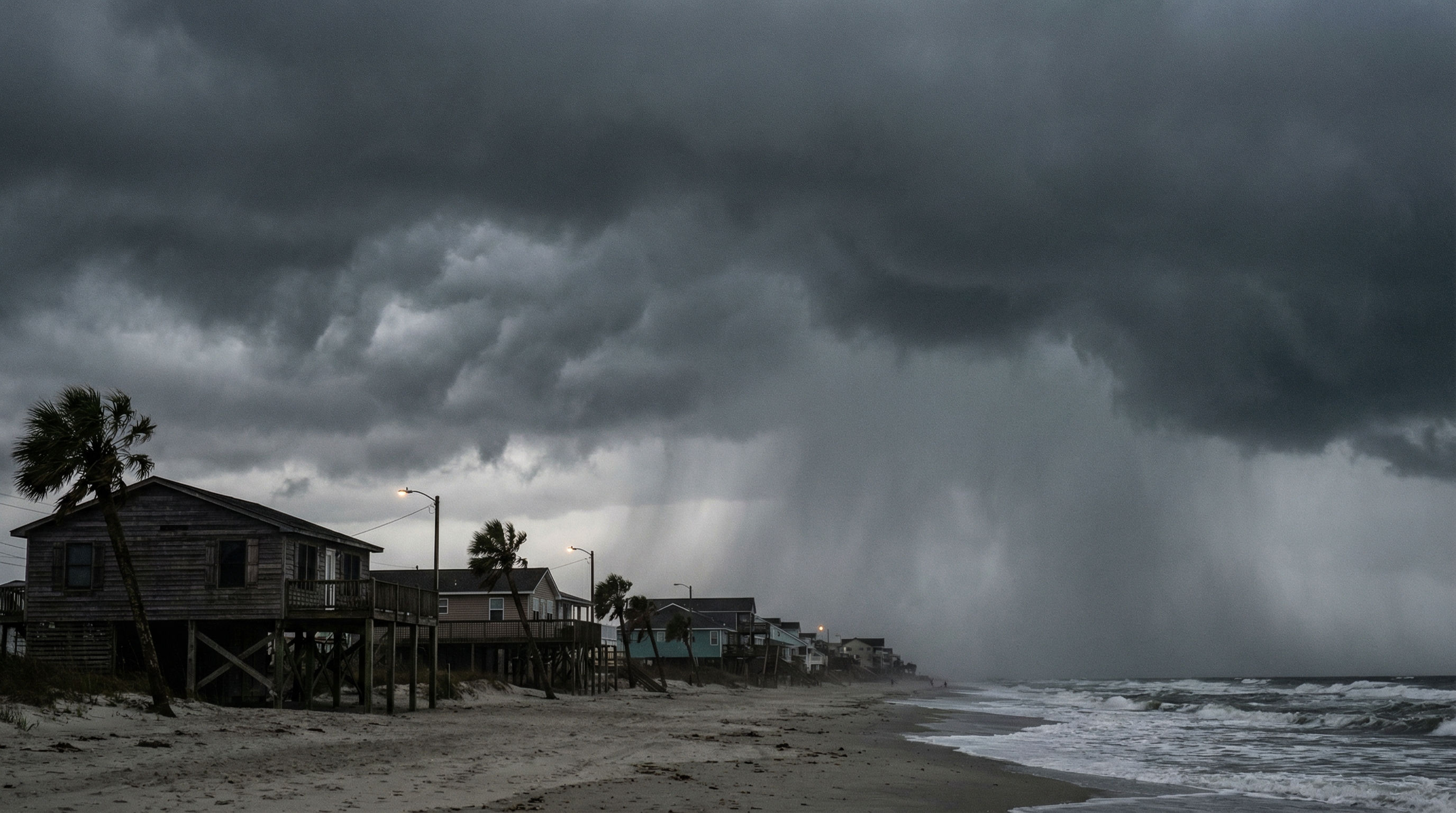
I've been through enough hurricane seasons on Isle of Palms and in Mount Pleasant to know that preparation isn't something you do when a storm enters the Atlantic. By then, you can't bind new wind coverage, contractors are booked solid, and the hardware store is out of plywood. The time to prepare is before June 1 -- ideally in the spring, when you can review your insurance, test your systems, and make decisions without urgency clouding your judgment. Here's the checklist I walk through personally every year, and the one I share with every homeowner I work with.
The Three Insurance Policies You Need in Force
This is the most important thing to understand about coastal South Carolina homeownership: you likely need three separate insurance policies, and all three need to be active before hurricane season begins.
- Homeowners insurance -- covers fire, theft, liability, and most non-flood, non-wind perils. This is your standard policy, but in coastal SC, it typically excludes wind and hail damage.
- Wind and hail insurance -- a separate policy that covers wind damage, which is the primary risk during a hurricane. Available through the SC Wind and Hail Underwriting Association or private carriers.
- Flood insurance -- covers flood damage, whether from storm surge, rising water, or heavy rainfall. Available through the NFIP or private carriers. I cover this extensively in my flood insurance guide and my post on flood maps vs insurance pricing.
If any one of these three policies lapses or has insufficient coverage, you have a gap that could be financially devastating. A hurricane brings wind and flood simultaneously -- your homeowners policy won't cover the wind damage, your flood policy won't cover the wind damage, and your wind policy won't cover the flood damage. Each policy covers its specific peril, and you need all three.
I've seen homeowners assume their "hurricane insurance" covers everything. There is no such thing as a single hurricane insurance policy in coastal South Carolina. Wind, flood, and homeowners are three separate policies with three separate deductibles. Make sure you understand what each one covers -- and what it doesn't -- before you need to file a claim.
Hurricane Deductibles: The Number That Surprises People
Standard homeowners insurance has a fixed deductible -- maybe $1,000 or $2,500. Hurricane and wind deductibles work differently. They're typically calculated as a percentage of your dwelling coverage, usually between 2% and 5%.
On a $1.5 million home, the math looks like this:
| Hurricane Deductible | Out-of-Pocket Amount |
|---|---|
| 2% of dwelling coverage | $30,000 |
| 3% of dwelling coverage | $45,000 |
| 5% of dwelling coverage | $75,000 |
That means before your wind insurance pays anything, you're covering the first $30,000 to $75,000 out of pocket. This is why I tell my clients: know your deductible, have access to the funds, and understand that "insured" doesn't mean "free." Your premium buys you protection against catastrophic loss, not against every repair.
Review Your Policies Before June 1 -- Not During
Here's a critical timing issue: once a named tropical storm or hurricane is in the Atlantic basin, most insurers will not bind new wind or flood coverage until the threat passes. If you realize on July 15 that your wind policy lapsed and there's a tropical storm forming off the coast of Africa, you may not be able to get coverage for days or weeks.
Review all three policies in April or May. Specifically:
- Verify coverage amounts -- has your home's replacement cost increased? Construction costs have risen significantly in the Charleston area. Make sure your dwelling coverage reflects current rebuild costs, not the amount you set five years ago.
- Check deductible levels -- understand exactly what your hurricane/wind deductible is and whether you can afford it
- Confirm policy dates -- make sure no policy expires during hurricane season without auto-renewal
- Review flood policy status -- if you have an NFIP policy, remember that letting it lapse means losing your grandfathered rate under Risk Rating 2.0
The Physical Prep Checklist
Insurance handles the financial risk. Physical preparation handles everything else. Here's what I do every year and what I recommend to homeowners across Isle of Palms, Mount Pleasant, and the coastal neighborhoods I serve:
Property and Landscaping
- Trim trees and remove dead branches -- the number one source of property damage in a hurricane (after flooding) is debris from trees. Have an arborist assess any large trees near your home.
- Secure or store outdoor furniture -- patio furniture, grills, planters, and decorations become projectiles in 80+ mph winds. Have a plan for where everything goes.
- Clear gutters and downspouts -- heavy rain during a tropical system needs somewhere to go. Clogged gutters cause water intrusion.
- Inspect your roof -- loose shingles, compromised flashing, or deteriorating seals around vents are entry points for wind-driven rain.
Shutters and Impact Protection
- Know your shuttering plan -- if you have hurricane shutters, test them now. If they're accordion-style, make sure the tracks are clean and they close fully. If they're panel shutters, know where the panels are stored and confirm you have all the hardware.
- Impact-rated windows -- if your home has impact-rated windows, you may not need shutters, but verify the rating with your insurance carrier for any premium credits.
- Garage doors -- often the weakest point in a home's wind resistance. Reinforced garage doors or bracing kits are a worthwhile investment.
Documentation and Contacts
- Photograph every room -- take detailed photos and video of all rooms, including closets, storage areas, and outdoor structures. Store these in the cloud, not on a device in the house.
- Inventory valuable items -- jewelry, art, electronics, and collections. Keep receipts and appraisals in a secure digital location.
- Have contractor contacts ready -- after a major storm, reliable contractors are booked within hours. Having an established relationship with a general contractor, a roofer, and a tree service gives you priority.
Generator Considerations
Power outages after hurricanes can last days or weeks in the Charleston area. Your options:
- Portable generator -- $500 to $2,000, runs on gasoline, powers essential circuits. Adequate for most situations but requires manual setup and fuel management.
- Whole-home standby generator -- $10,000 to $25,000 installed, runs on natural gas or propane, starts automatically when power drops. Requires a permit for installation and an annual maintenance contract.
If you're buying a home in a coastal neighborhood and a whole-home generator is important to you, factor it into your budget during the home search, not as an afterthought.
How Hurricane Season Affects Buying and Selling
If you're buying or selling a home during hurricane season (June through November), be aware of these practical impacts:
- Insurance binding restrictions -- you may not be able to bind wind or flood coverage during an active tropical threat, which can delay closing
- Inspection scheduling -- inspectors get backed up before and after storms
- Market psychology -- after a significant storm, buyer activity typically pauses briefly, then often increases as people reassess their insurance and housing situations
- Price negotiations -- properties with recent wind or flood damage claims may face scrutiny from both buyers and insurers
I've closed transactions during hurricane season many times. It's absolutely doable -- you just need to plan around the weather windows and have your insurance lined up well in advance of closing.
Living on the coast means coexisting with hurricane season. It's a reality, not a reason to avoid the Lowcountry -- but it is a reason to be prepared. If you're considering a home on Isle of Palms, in the Old Village, or anywhere along the coast, I can help you evaluate the property's specific vulnerabilities and build a realistic ownership cost picture that includes all three insurance policies and the preparation that comes with coastal living. Planning to sell before hurricane season? Let's talk timing and strategy.