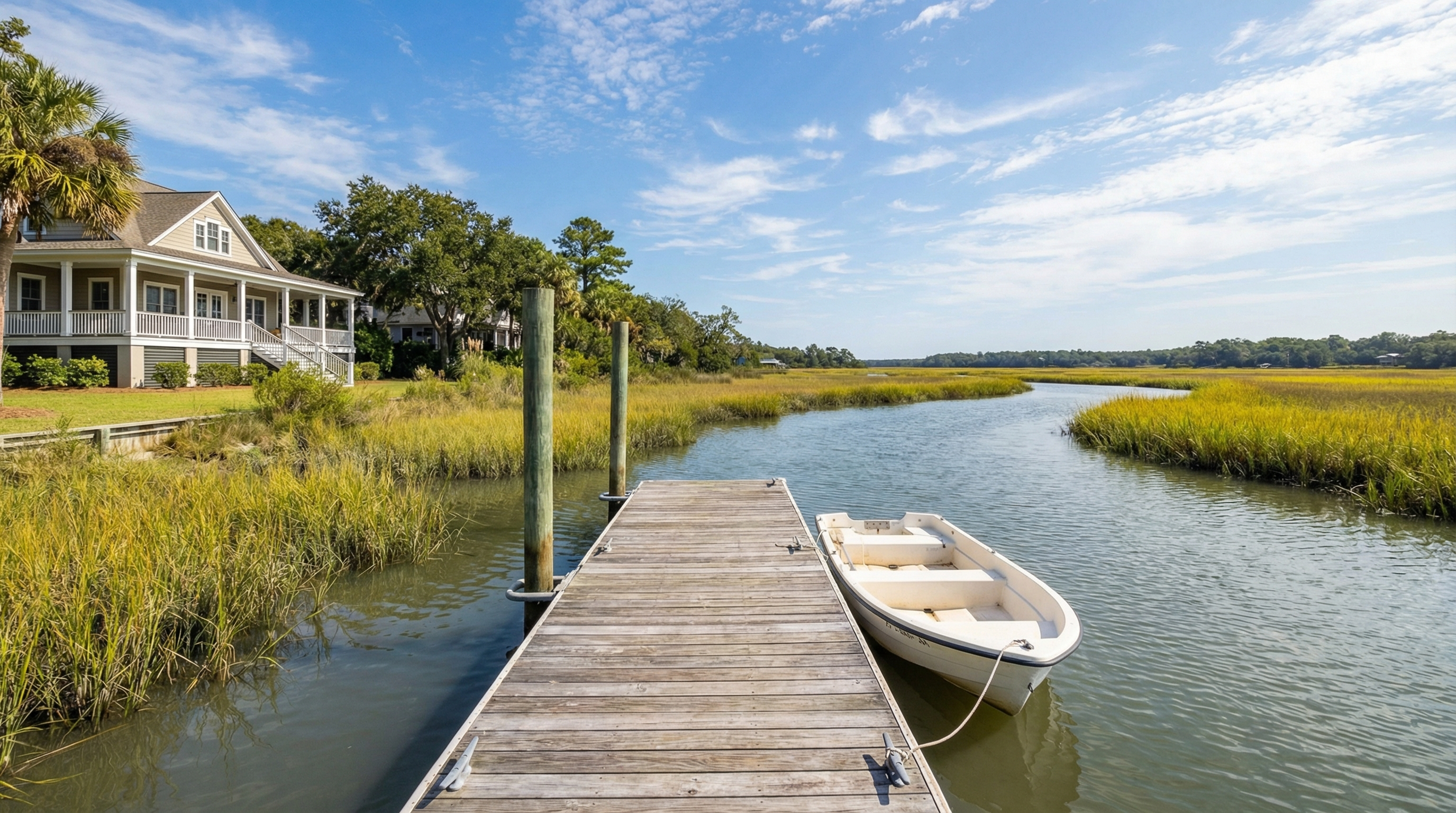
One of the most common conversations I have with buyers looking at waterfront property in the Charleston area goes like this: "It's on the water, so I can build a dock, right?" The answer is: maybe. And that "maybe" involves state permitting, federal approval, HOA covenants, environmental restrictions, and a timeline that rarely moves as fast as you'd like. If you're buying waterfront property with the intention of having a dock -- whether for a boat, a kayak launch, or just to sit on at sunset -- you need to do this due diligence before closing, not after.
Riparian Rights: What You Actually Own
In South Carolina, waterfront property owners have riparian rights -- the legal right to access the navigable water adjacent to their property. But riparian rights give you the right to access the water. They do not automatically give you the right to build a structure in the water.
Building a dock requires permits from multiple agencies, and each has its own criteria. Your riparian rights are the starting point, not the finish line. I've seen buyers assume that a waterfront lot means a guaranteed dock, only to discover during due diligence that the creek is too narrow, the frontage is insufficient, or the HOA prohibits private docks entirely.
Water access is one of the most emotionally compelling features of Lowcountry real estate -- and one of the most legally complex. I always tell my waterfront buyers: fall in love with the property, but verify the dock situation with the same rigor you'd apply to the home inspection.
The Permitting Agencies: Who You Need Approval From
Building a dock in coastal South Carolina requires approval from at least two agencies, sometimes three:
SC Department of Environmental Services (formerly DHEC)
The state's coastal permitting division regulates all construction waterward of the Critical Area Line -- the jurisdictional boundary between upland property and tidally influenced areas. You'll need a permit for any dock, pier, floating dock, or boat lift. The application requires a survey showing the critical area line, your proposed dock design, and documentation of your riparian rights.
US Army Corps of Engineers (USACE)
Federal law requires a USACE permit for any structure placed in navigable waters of the United States. For most residential docks in the Charleston area, this falls under a Regional General Permit -- a pre-authorized category that simplifies the process but doesn't eliminate it. You still need to submit an application and receive written authorization.
Local Municipality or County
Depending on your location, you may also need a local building permit. Isle of Palms, for example, has its own building department with specific requirements for dock construction.
The Critical Area Line: Why It Matters
The Critical Area Line is the boundary below which the state has jurisdiction over construction. Anything you build waterward of this line -- a dock, a seawall, a rip-rap revetment -- requires state permitting. A surveyor can locate this line on your property, and I strongly recommend having it identified before you close on any waterfront lot.
The critical area line also affects what you can do on the upland side. Setback requirements from the critical area line may limit where you can build structures, install pools, or even grade the land. Understanding this line's location is as important for your upland plans as it is for your dock plans.
Common Surprises in Dock Permitting
After two decades of helping clients navigate waterfront purchases in the Charleston area, here are the situations that catch buyers most often:
- Narrow creek restrictions -- if the creek in front of your property is less than 20 feet wide at mean high water, dock permitting becomes significantly more difficult. In very narrow creeks, permits may be denied entirely to preserve navigability.
- Insufficient frontage -- you need adequate water frontage to qualify for a dock permit. The specific requirements depend on the waterway and the type of dock.
- Shared dock easements -- some waterfront properties come with shared dock rights rather than individual dock permits. Understand exactly what "shared" means -- how many users, who maintains it, who pays for repairs.
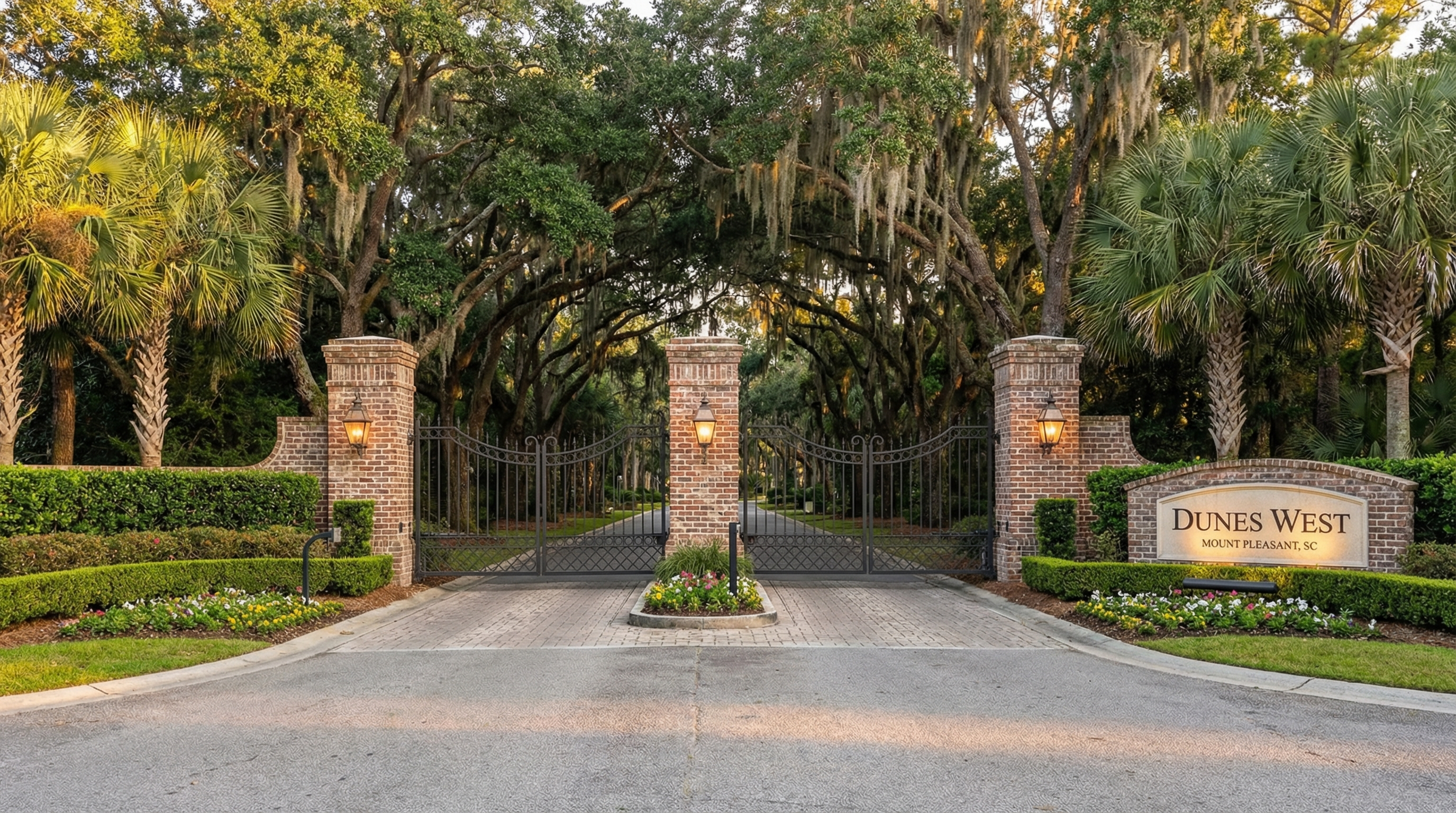
- HOA dock restrictions -- many communities in Dunes West, Daniel Island, and other planned developments have covenants that restrict or prohibit private docks, even if you have the waterfront lot and the riparian rights. The HOA's rules can be more restrictive than the state's.
- Dock length limits -- permits typically restrict how far your dock can extend into the waterway. This matters if you need depth for a larger boat.
Timeline and Cost: What to Expect
A new residential dock permit in the Charleston area typically takes 3 to 6 months from application to approval, assuming no complications. If there are environmental concerns, neighbor objections, or agency backlogs, it can take longer.
Construction costs for a typical residential dock -- a fixed pier with a dock head and a boat lift -- range from $30,000 to $80,000 depending on length, materials, and whether you're adding a lift, water, and electricity. Floating docks can be less expensive but have their own permitting nuances.
Your Pre-Purchase Dock Due Diligence Checklist
Before you close on a waterfront property in the Lowcountry, work through every item on this list:
- Verify riparian rights -- have your attorney confirm that the property deed includes riparian rights to the adjacent waterway
- Check HOA/POA covenants -- review the community's governing documents for any dock restrictions or prohibitions
- Survey the critical area line -- hire a surveyor to locate the critical area line on the property
- Measure the creek width -- if the property fronts a tidal creek, determine its width at mean high water
- Research existing permits -- if there's an existing dock, verify the permit is current and transferable
- Talk to a dock builder -- get a preliminary assessment of feasibility and a rough cost estimate before closing
- Budget realistically -- $30,000 to $80,000 for construction, plus $300 to $500 for the survey, plus permit fees
- Factor in the timeline -- if you want a dock, plan for 3 to 6 months of permitting plus construction time after closing
If you're considering waterfront property in the Charleston area -- whether it's a deep-water home on the Intracoastal, a marsh-front lot in Dunes West, or a creek-front property on Isle of Palms -- I can help you navigate the dock question as part of the buying process. The flood insurance implications of waterfront property are equally important to understand. Reach out and we'll look at the full picture together.