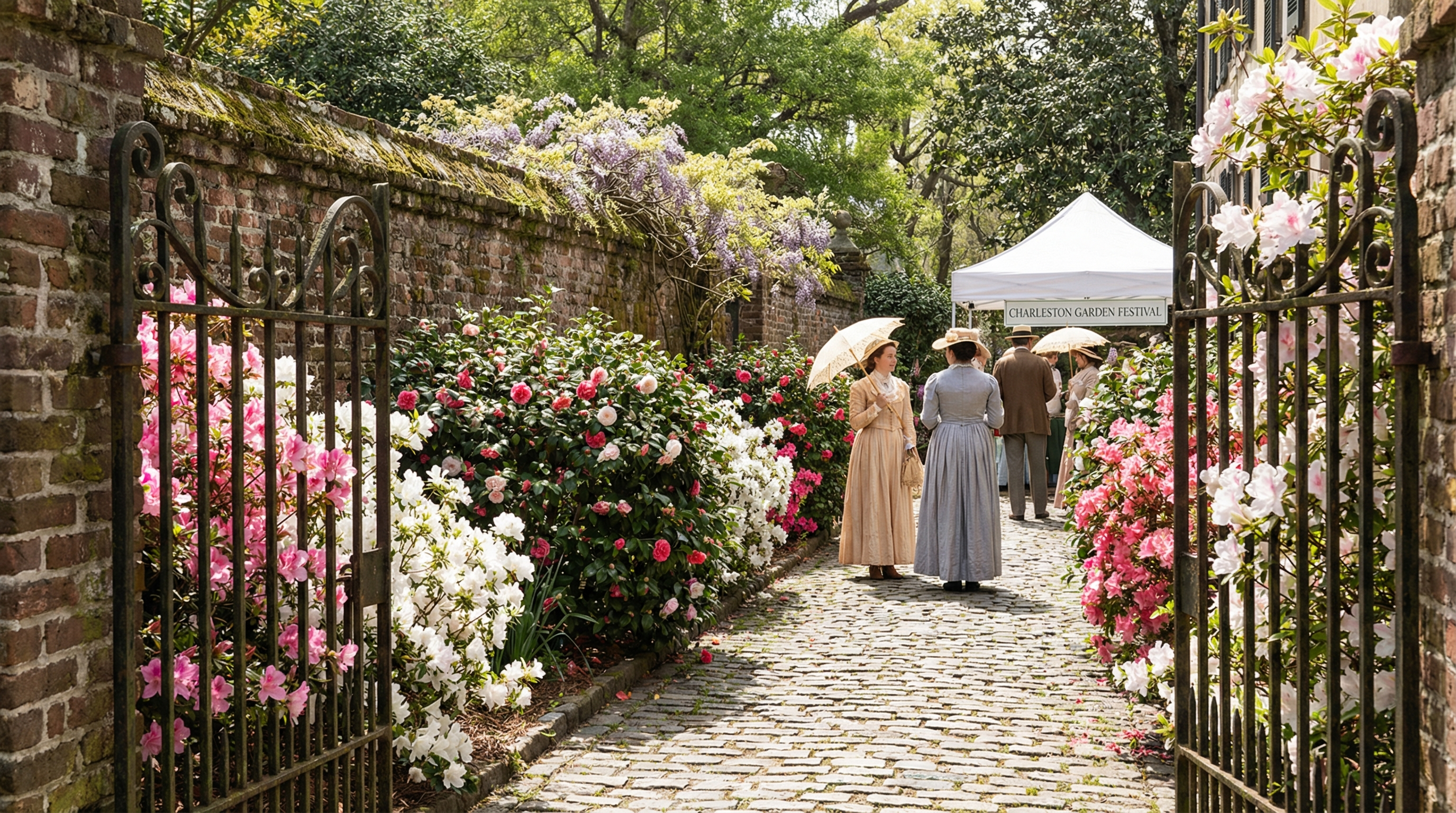
Every spring, something happens in Charleston that no marketing campaign could replicate. Thousands of visitors walk through private homes and gardens in the historic district during the Charleston Festival, and they experience something that photographs and listing descriptions cannot convey: the actual feeling of living in a historic Charleston home. The light through the piazza shutters at four in the afternoon. The jasmine in the courtyard. The neighbor waving from across the garden wall. That experience -- unscripted, sensory, personal -- is the most powerful real estate marketing that exists in this city, and it happens every March and April without a single open house sign.
The 2026 Charleston Festival: March 18 - April 11
The Historic Charleston Foundation's Charleston Festival runs March 18 through April 11, 2026. The signature events are the private home and garden tours, where homeowners open their properties to the public for curated walks through some of the most extraordinary residential architecture in America. These aren't museum houses. They're living homes -- furnished, landscaped, inhabited -- and that distinction is what makes them so effective at turning visitors into future buyers.
I've worked in this market for over two decades, and the pattern is consistent: a meaningful percentage of my out-of-town buyers first visited Charleston during festival season. They came with friends or family for a cultural weekend, walked through a home on Tradd Street or a garden in Harleston Village, and something shifted. The visit stopped being a vacation and started being reconnaissance.
I've lost count of how many clients told me they fell in love with Charleston during festival season. They came for the gardens, stayed for the live oaks, and six months later we were closing on a home in Old Village.
Spring Listing Season in Historic Neighborhoods
The festival creates a natural alignment between Charleston's best visual season and the beginning of the spring real estate market. Gardens are blooming, the weather is warm without the summer humidity, and the historic district looks its absolute best. For sellers in Old Village, downtown, and Harleston Village, this is the window to list.
The logic is straightforward: serious buyers are already in town. They're walking through neighborhoods. They're seeing the lifestyle firsthand. When a listing appears in these neighborhoods during festival season, it benefits from all of that ambient context. You don't have to convince a buyer that Old Village is charming -- they just walked through it for three hours and can still smell the Confederate jasmine.
Listing Strategy for Historic Homes
If you're listing a historic home or a home in one of Charleston's character-rich neighborhoods between March and April, consider the festival calendar in your marketing timeline. Photographs taken during peak bloom. Open houses timed near festival routes. Description language that connects your property to the broader neighborhood experience. These aren't gimmicks -- they're strategic alignment with the strongest lifestyle-selling season on the calendar.
The Neighborhoods That Benefit Most
The festival's impact isn't evenly distributed. The neighborhoods that benefit most are the ones where the built environment and the daily lifestyle are the primary value proposition -- where the architecture, the gardens, the walkability, and the community character are the reasons people buy.
- Old Village in Mount Pleasant: The tree canopy, Pitt Street Bridge, and village-scale walkability attract festival visitors who want the historic feel without the downtown price point. Buyers who discover Old Village during spring often describe it as their favorite neighborhood in the region.
- Downtown Charleston (South of Broad, Harleston Village): The epicenter of the festival and the highest-value residential real estate in the state. Homes here sell on emotion as much as on comps, and the festival creates that emotion more effectively than any staging could.
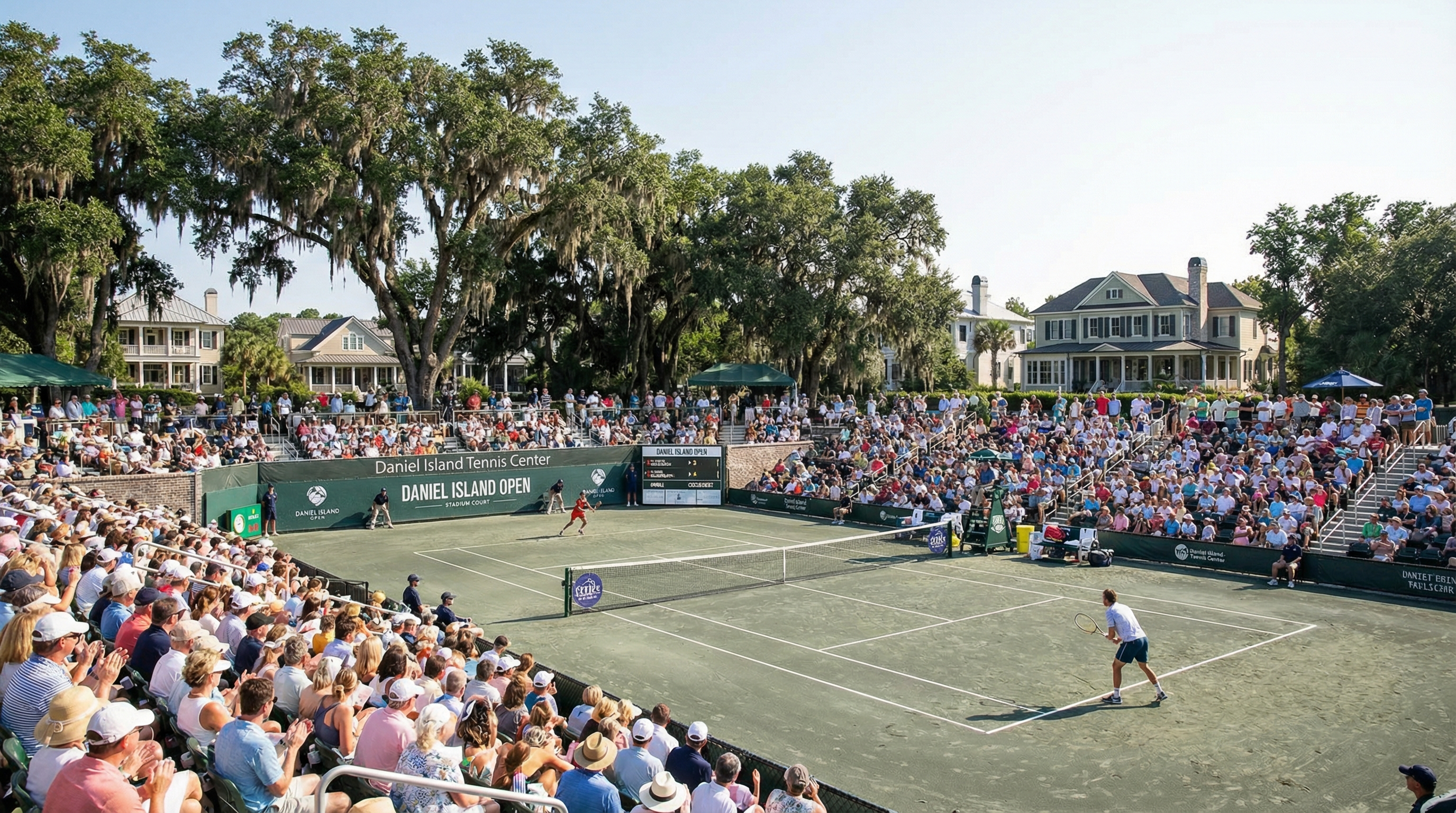
- Daniel Island: Not a historic neighborhood, but Daniel Island's spring events -- including the Credit One Charleston Open -- extend the visitor-to-buyer pipeline into April and beyond.
The Visitor-to-Buyer Pipeline
Here's how the pipeline actually works. A couple visits Charleston for the festival. They walk through homes, eat at restaurants, explore neighborhoods on foot. They go home. Weeks later, they start browsing listings online -- not urgently, just curiously. That curiosity becomes a search. The search becomes a conversation with an agent. Six to twelve months after the festival visit, they're under contract.
This pattern is so consistent that I treat festival season as the beginning of a relationship cycle, not a transaction cycle. The buyers I meet in March don't typically close until fall or the following winter. But the seed was planted during those home tours, and once it takes root, Charleston has a way of not letting go.
Spoleto Extends the Window
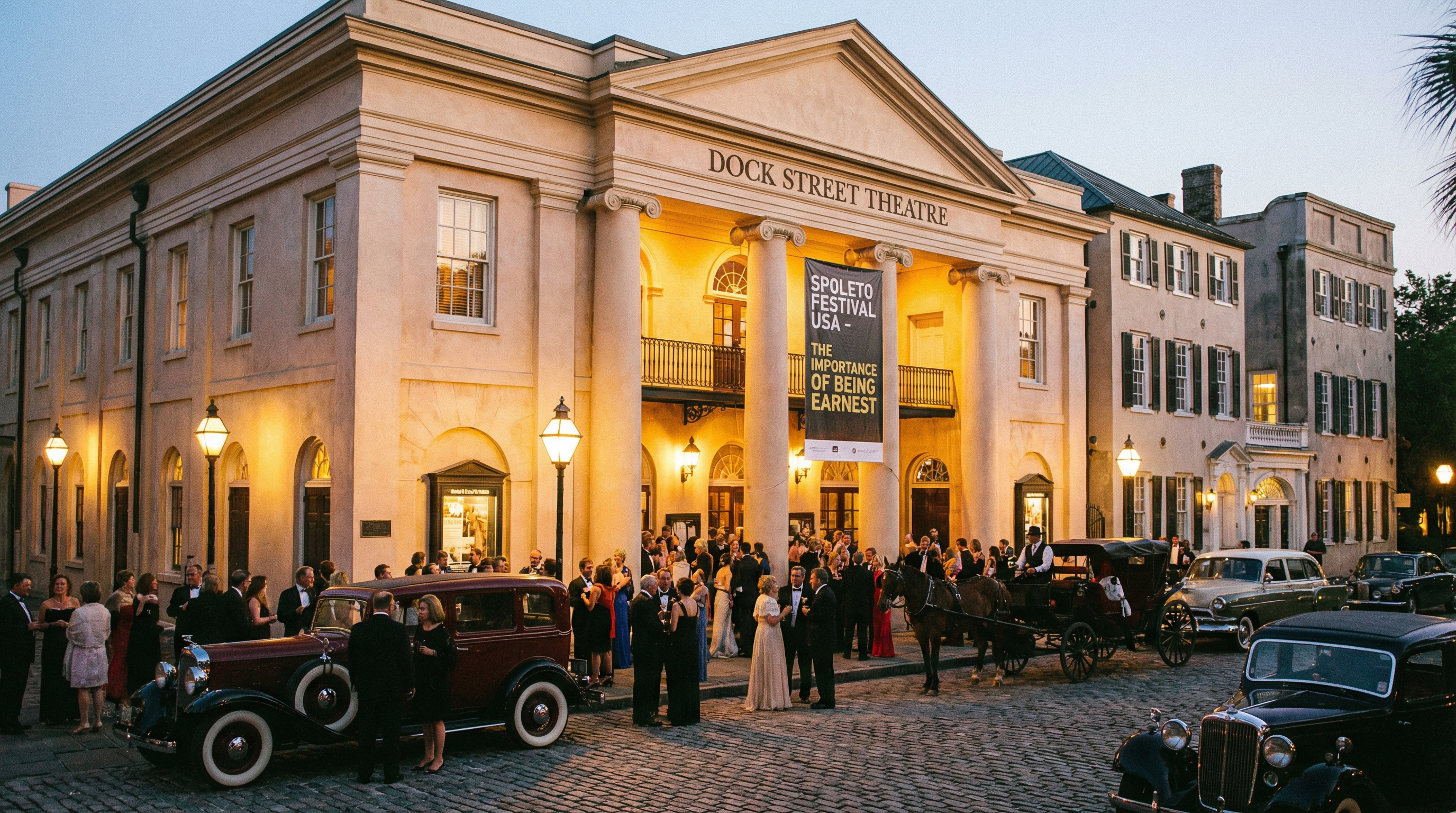
What makes Charleston unique is that the spring window doesn't close after the Charleston Festival. The Spoleto Festival USA runs from late May through early June, drawing another wave of culturally motivated visitors -- many of whom overlap with the high-net-worth buyer demographic. Between the Charleston Festival and Spoleto, the Lowcountry has nearly three months of continuous cultural programming that doubles as lifestyle marketing for the region's most desirable neighborhoods.
For sellers, this extended window means you're not constrained to a two-week listing window. A well-priced, well-presented home in a lifestyle neighborhood can leverage the spring cultural calendar from March through June -- the longest and most effective selling season in the Charleston market.
For Buyers: The Festival as Research
If you're considering a move to Charleston, attending the festival is the single best piece of due diligence you can do -- more valuable than any amount of online research. Walk the neighborhoods. See the homes from the inside. Pay attention to what you feel, not just what you see. Then reach out to me, and we'll translate that emotional response into a strategic home search built around the neighborhoods and lifestyle that resonated.
The homes you see on the festival tour may not be for sale. But the neighborhood they're in almost certainly has inventory, and the feeling you got walking through that garden is something we can find for you in a home of your own. That's the conversation I love having, and spring is when it starts.