The Old Village posted a median sale price of approximately $2,837,500 in January 2026, with a median price per square foot of roughly $1,150 -- the highest in the Charleston metropolitan area. And the median days on market? 175 days. I can already hear the questions: "Is the Old Village overpriced? Why are homes sitting so long?" The answer, which I have been explaining to clients for over two decades, is that the Old Village does not operate like a conventional real estate market, and applying conventional metrics to it will lead you to the wrong conclusions.
Old Village Market Data: January 2026
| Metric | January 2026 | Year-over-Year Trend |
|---|---|---|
| Median Sale Price | ~$2,837,500 | Up |
| Median Price per SF | ~$1,150 | Up (highest in Charleston metro) |
| Median Days on Market | ~175 | Elevated |
| Recent Sales Range | $2.8M - $3.2M | -- |
| Key Streets | Bennett, Whilden, Center | -- |
Why 175 Days on Market Is Not a Warning Sign in Old Village
In most neighborhoods, a 175-day median DOM would concern me. In the Old Village, it is entirely consistent with how this market has functioned for as long as I have been selling here. Here is why.
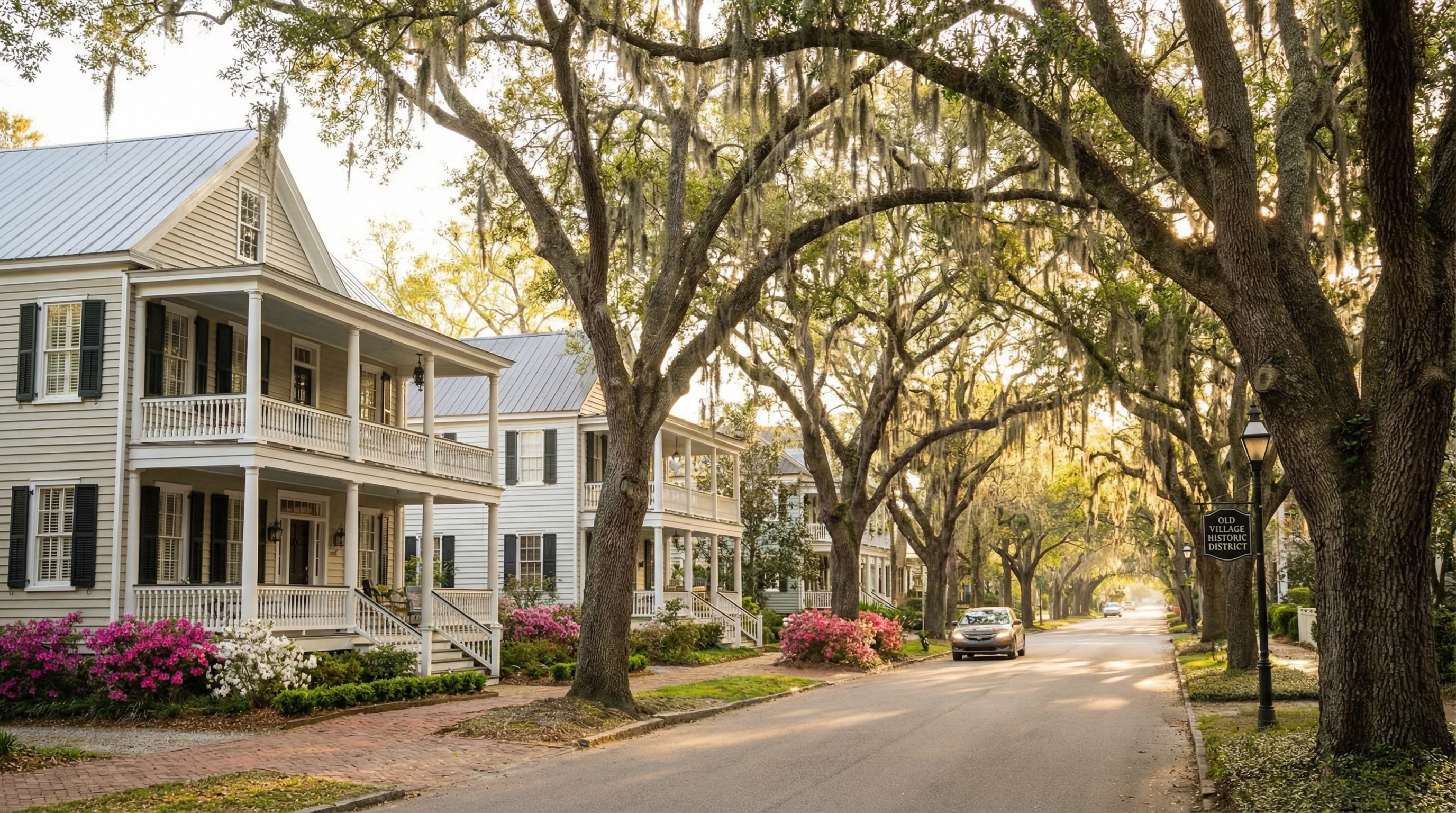
The Old Village is the historic heart of Mount Pleasant -- predating the Civil War in many cases -- and it comprises a small, finite collection of homes on tree-lined streets between Pitt Street and the waterfront. There is no new subdivision being built. There are no model homes to tour. Every property is unique: different vintage, different renovation history, different lot configuration, different relationship to the water. When a buyer is evaluating a home in the Old Village, they are not comparing floor plans -- they are comparing irreplaceable character, and that takes time.
A 175-day median DOM in the Old Village is not a market problem -- it is a feature of a neighborhood where every home is singular, buyers are deliberate, and there is no such thing as a cookie-cutter comp. The right buyer for a $2.8 million antebellum cottage is not the same buyer who wants a $2.8 million new-build in Carolina Park. Different market, different cadence.
Inventory constraints amplify this dynamic. In any given month, there might be only two or three homes actively listed in the Old Village. When inventory is this thin, a single property that takes longer to sell -- perhaps because the seller is testing a premium price, or because the home needs a buyer willing to take on a renovation within the historic district's guidelines -- can push the median DOM significantly higher without indicating any broader market weakness.
What $1,150 Per Square Foot Actually Buys in Old Village
At $1,150 per square foot, the Old Village commands a premium that dwarfs every other neighborhood in the Charleston area. For context, Daniel Island trades at $561 per square foot, and Carolina Park is around $436. The question is whether that premium is justified -- and after selling in this neighborhood for years, I believe it is, for the right buyer.
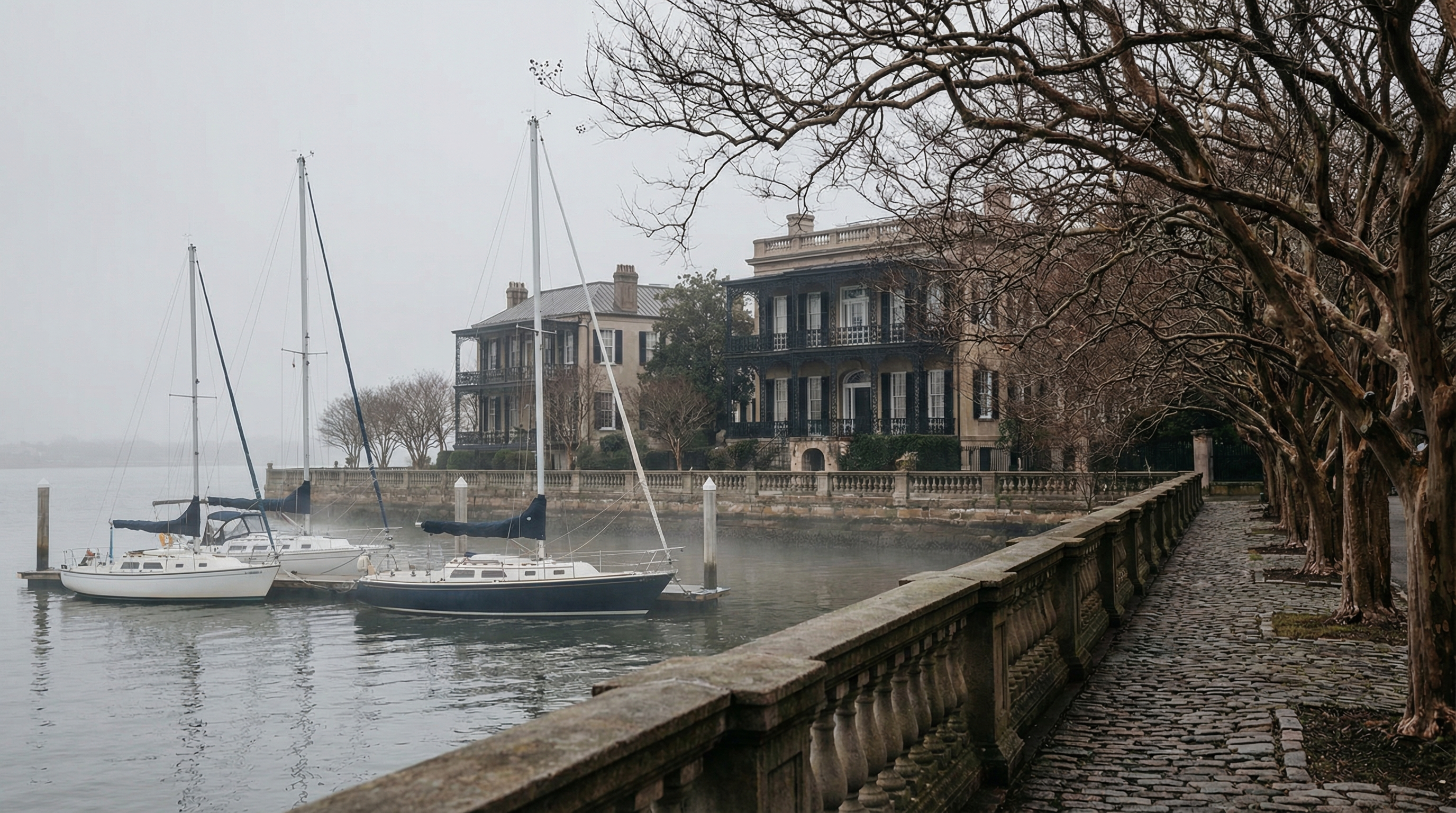
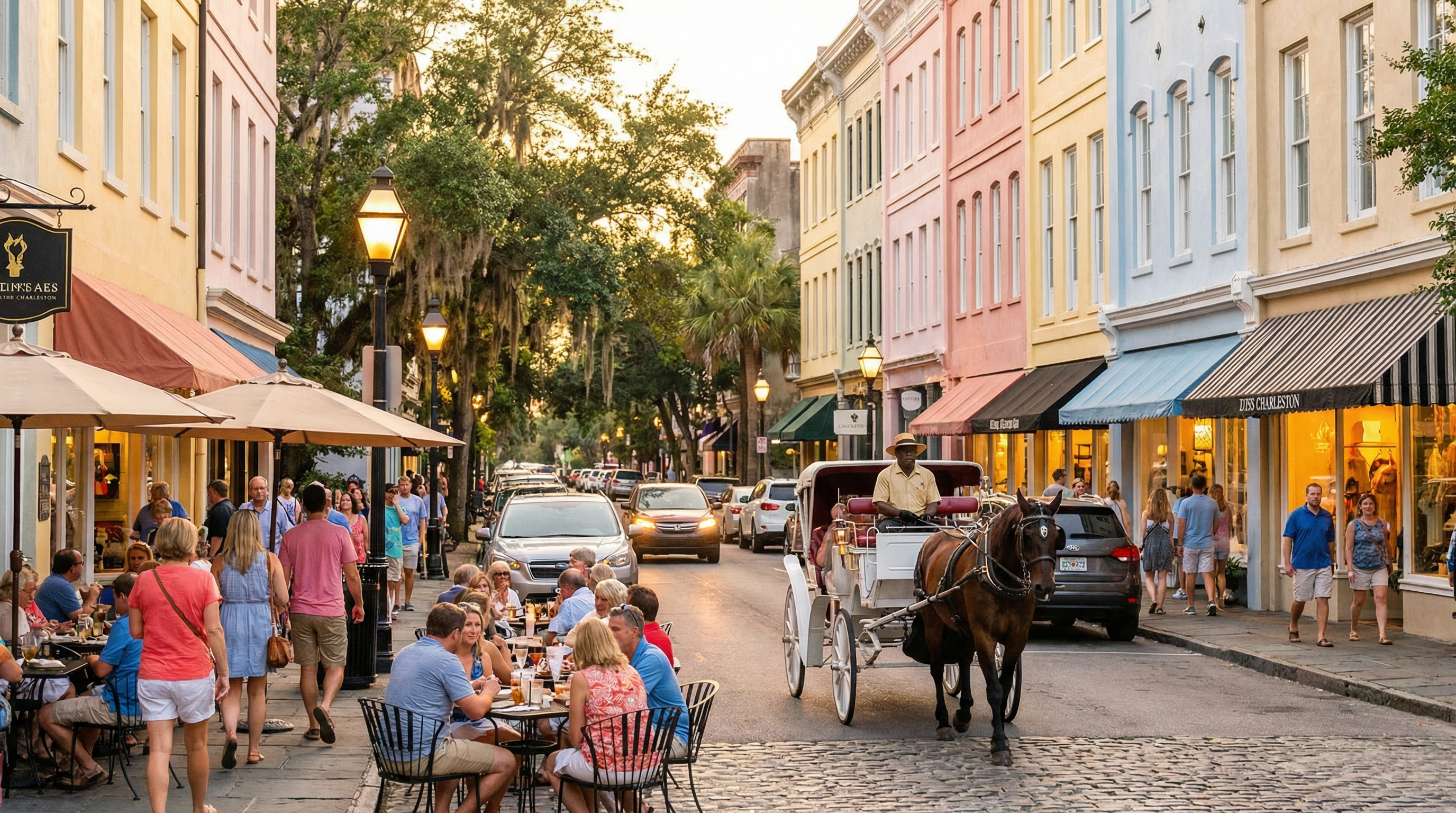
What you are paying for at $1,150 per square foot is not just square footage. You are paying for a walkable neighborhood where you can stroll to the Pitt Street Bridge at sunset, walk to dinner at the Old Village Post House, and bike to Shem Creek without crossing a highway. You are paying for mature live oaks that took a hundred years to grow. You are paying for historic district protections that limit new construction and major renovations, which means the character of your neighborhood is preserved by regulation, not just goodwill. And you are paying for irreplaceable proximity to the water -- Charleston Harbor views, Cove Inlet marshes, and the kind of Lowcountry light that landscape painters travel across the country to capture.
Recent sales on Bennett Street, Whilden Street, and Center Street in the $2.8 to $3.2 million range confirm that the market is actively supporting these price levels. These are not aspirational listings that eventually reduced -- they are closed transactions that reflect what the market is willing to pay for Old Village addresses.
Old Village Historic District Restrictions: What Buyers Need to Know
The historic district overlay in the Old Village is both a feature and a constraint, and every buyer needs to understand it before making an offer. Restrictions limit the scope of exterior modifications, new construction, and in some cases, additions. The Mount Pleasant historic district guidelines are actively enforced, and I have worked with clients who underestimated the review process and timeline for their renovation plans.
This is not a reason to avoid the Old Village -- it is a reason to enter the process with clear eyes. If you plan to renovate, budget for architectural review, historic compliance, and potentially longer permitting timelines. If you are buying a home that has already been thoughtfully updated, you are benefiting from someone else having navigated that process, and the per-square-foot premium reflects that value.
Who Is Buying in Old Village Right Now
The Old Village buyer profile is specific: these are people who value character and walkability over square footage and modern amenities. They tend to be well-capitalized, patient, and emotionally connected to the idea of living in a historic neighborhood. Many are coming from out of state and have fallen in love with the Old Village on a visit to Charleston. Others are local buyers who have watched the neighborhood for years and are ready to make their move when the right property appears.
What I do not see in the Old Village is impulsive buying. At $2.8 million and above, every purchase is deliberate, and that is reflected in the extended days on market. Sellers who understand this dynamic and price their homes appropriately will find their buyer. Sellers who price for speed in a market that operates on its own timeline will be frustrated.
If the Old Village is on your radar, I recommend understanding the walkability and daily life of the neighborhood before you focus on individual properties. This is a place where the neighborhood experience matters as much as the home itself. And as with any waterfront-adjacent property in the Lowcountry, flood insurance is a line item that requires careful attention -- zones and premiums vary even within the Old Village's compact footprint.
The Old Village is not for everyone, and it is not trying to be. It is for buyers who understand that the most valuable things in real estate -- location, character, history, walkability -- cannot be manufactured. They can only be found. Search Old Village listings or contact me to discuss whether this market fits your criteria.