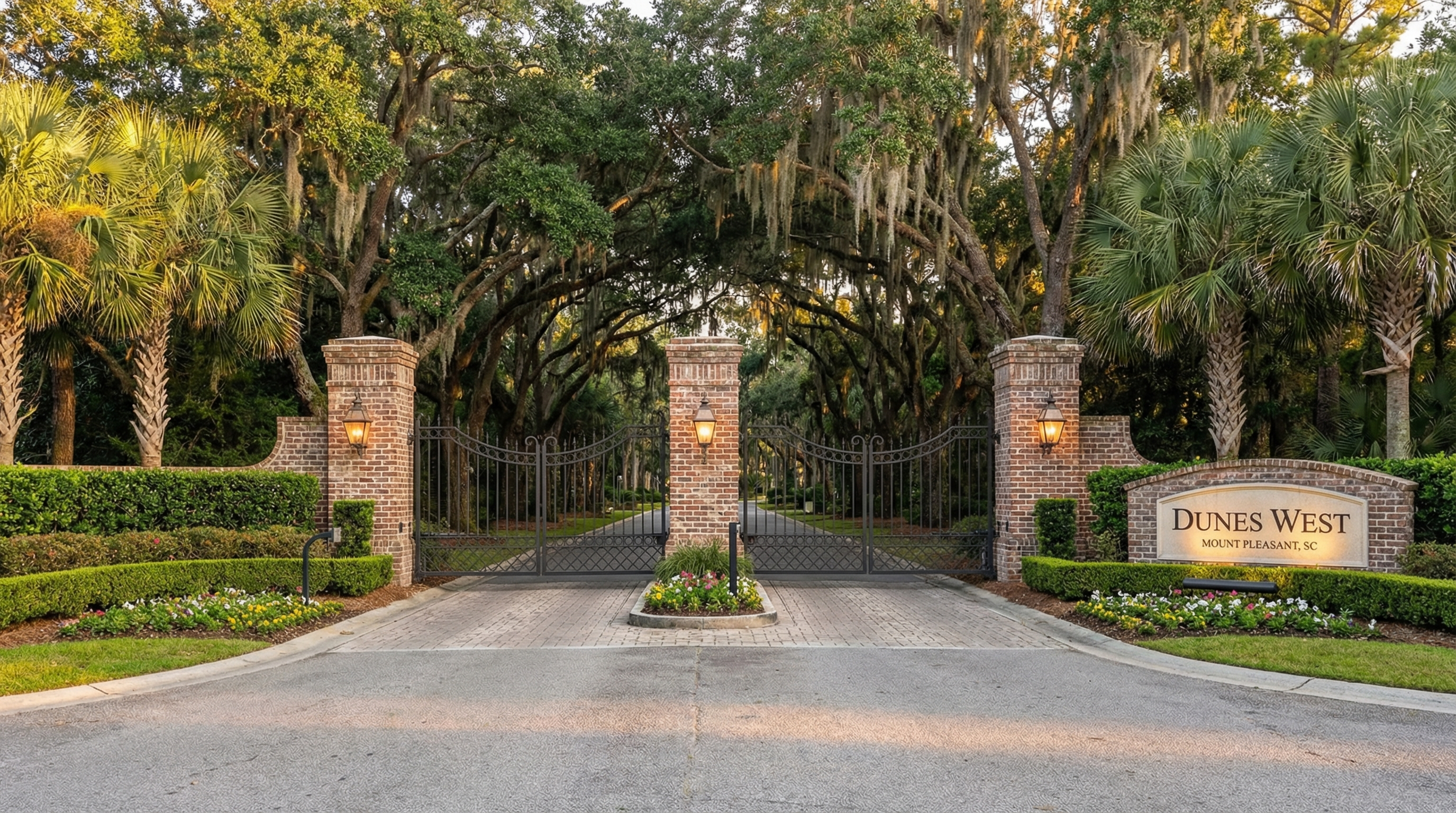
If you're buying a home in the Charleston area -- or you already own one and you've been staring at your tax bill trying to make sense of it -- you're not alone. South Carolina's property tax system is genuinely unusual compared to most states, and the differences aren't small. I've watched buyers from New York, New Jersey, and Florida sit across the closing table with their jaws open when they realize how much the primary-vs-second-home distinction actually costs them in annual taxes. So let me walk through this in the same way I explain it to my clients: plainly, with real numbers.
How Your Charleston County Tax Bill Is Actually Built
Every property tax bill in South Carolina starts with the fair market value of your property -- what the county assessor believes your home is worth. But here's where South Carolina diverges from most states: that fair market value is then multiplied by an assessment ratio to produce your assessed value, and only the assessed value gets taxed.
The assessment ratios are fixed by state law:
- 4% for your primary residence -- the home you live in as your legal domicile
- 6% for everything else -- second homes, vacation properties, investment rentals, vacant land
That two-percentage-point difference sounds small until you run the numbers on a Daniel Island property worth $1.2 million. Let me show you.
The Math: $1.2 Million Primary Home vs $1.2 Million Second Home
| Factor | Primary Residence (4%) | Second Home (6%) |
|---|---|---|
| Fair Market Value | $1,200,000 | $1,200,000 |
| Assessment Ratio | 4% | 6% |
| Assessed Value | $48,000 | $72,000 |
| Millage Rate (approx. 0.27) | $12,960/year | $19,440/year |
| Annual Difference | $6,480/year | |
That's roughly $540 per month more in property taxes on the second home -- and I haven't even touched insurance yet. This is why I tell every out-of-state buyer: before you decide whether this will be your primary or your second home, run the full tax scenario. It changes the economics of the purchase. If you're considering a move to the area, I cover the full picture in my post on the real costs of moving to Charleston.
The Five-Year Reassessment Cycle
South Carolina reassesses property values on a five-year cycle. Charleston County's most recent reassessment used 2023 sales data to set values for the 2025 tax year. That means the assessor looked at what comparable properties actually sold for in 2023 -- not what your home might be worth today, not what Zillow says, but what the market did two years ago.
This matters for two reasons. First, if you bought your home in 2021 at the peak of that particular buying frenzy, your reassessed value may actually be lower than what you paid -- 2023 prices in some Charleston neighborhoods had softened slightly from the 2021/2022 highs. Second, if you bought in 2018 and your neighborhood has appreciated significantly, you might see a substantial jump.
I've seen clients in Mount Pleasant go through a reassessment cycle expecting a modest increase and receive a notice showing their assessed value jumped 40%. The sticker shock is real. But here's what most people don't understand -- the 15% cap doesn't work the way they think it does.
The 15% Cap: What It Actually Caps (and What It Doesn't)
South Carolina has a 15% cap on the increase in taxable value between reassessment periods for most owner-occupied properties. But here's the critical distinction that catches people: it's a cap on the value increase, not on your tax bill increase.
Your millage rate -- the rate applied to your assessed value -- can change independently. If your local school district passes a bond referendum or the county increases its operating millage, your tax bill can still go up even if your assessed value is capped. The cap limits how much the assessor can raise your property's taxable value, but your total bill is value times rate, and both can move.
Also important: the 15% cap applies across the entire reassessment period, not per year. So if your home's fair market value increased by 30% over five years, the cap limits the taxable value increase to 15%. But if you sell the home and a new buyer purchases it, the cap resets. The new owner's assessed value is based on the purchase price -- no cap protection. This is why buyers sometimes face higher tax bills than the previous owner did on the same property.
When the Cap Doesn't Apply
The 15% cap does not apply to properties assessed at the 6% ratio. If you own a second home or investment property in Charleston County, your reassessed value will reflect the full market increase with no cap. For properties in neighborhoods like Isle of Palms or Sullivan's Island where second homes and short-term rentals are common, this means reassessment years can deliver significant increases.
The SC Homestead Exemption for Seniors
If you're 65 or older, totally and permanently disabled, or legally blind, South Carolina offers a homestead exemption that removes the first $50,000 of fair market value from your property tax bill on your primary residence. On a primary residence assessed at 4%, that's $2,000 in assessed value eliminated -- which translates to roughly $540 per year in tax savings at typical Charleston County millage rates.
It's not a fortune, but it's automatic once you qualify, and it stacks on top of the 4% primary residence ratio. For retirees relocating from states with higher property taxes -- and I work with many -- the combination of the 4% ratio, the homestead exemption, and the fact that South Carolina doesn't tax Social Security income adds up to meaningful savings. The exemption applies to your primary residence only, and you need to file with the Charleston County Auditor's office.
What Triggers a Tax Reassessment Outside the Cycle
The five-year reassessment cycle is the big event, but certain changes can trigger a reassessment of your individual property between cycles:
- Transfer of ownership -- when you buy the property, the assessor resets the value to the purchase price
- Major improvements -- additions, significant renovations, or new structures (not routine maintenance)
- Change of use -- converting a primary residence to a rental, or vice versa, which also changes your assessment ratio
I've had clients purchase a home in between reassessment years and then be surprised when their first tax bill is significantly higher than what the seller was paying. The seller may have owned the property for 15 years with the benefit of the 15% cap. The buyer gets the property reassessed at the purchase price. This is a standard conversation I have with every buyer I work with -- always budget for taxes based on your purchase price, not the seller's current bill.
Flood Insurance and Insurance Costs: The Other Half of the Equation
Property taxes are only one piece of what I call the "carrying cost puzzle" in the Lowcountry. Flood insurance costs can vary by thousands of dollars per year depending on your flood zone, elevation, and the new Risk Rating 2.0 pricing model. When I help buyers analyze a property, we look at taxes, flood insurance, wind/hail insurance, and HOA fees together -- because that total monthly carrying cost is what determines whether a property actually fits your budget.
If you'd like to see properties across the Charleston market and understand what the full cost picture looks like in each neighborhood, start a search here or reach out to me directly. I run the numbers on every property before my buyers make offers -- because understanding the real cost of ownership isn't optional in coastal South Carolina. It's foundational.